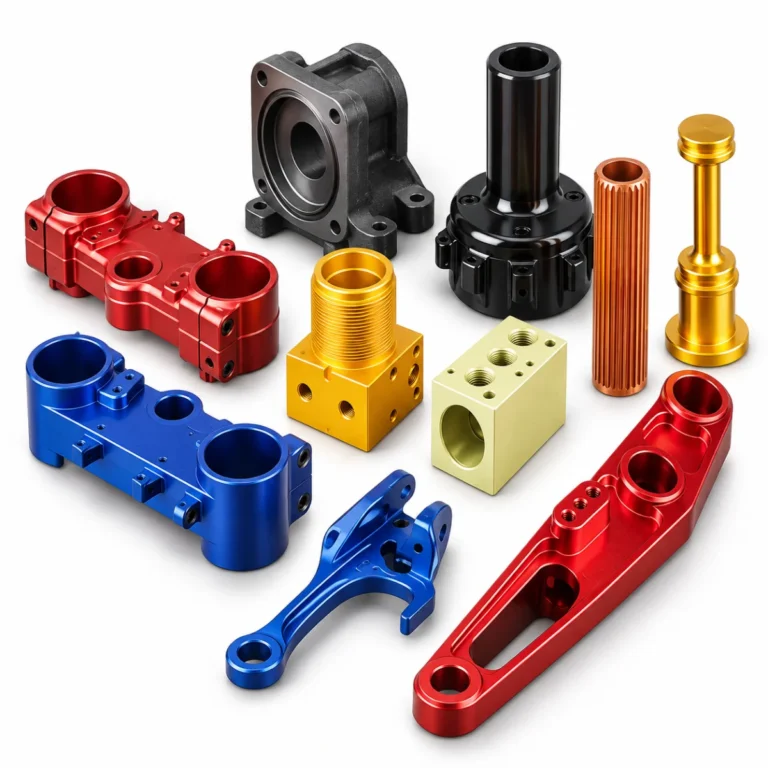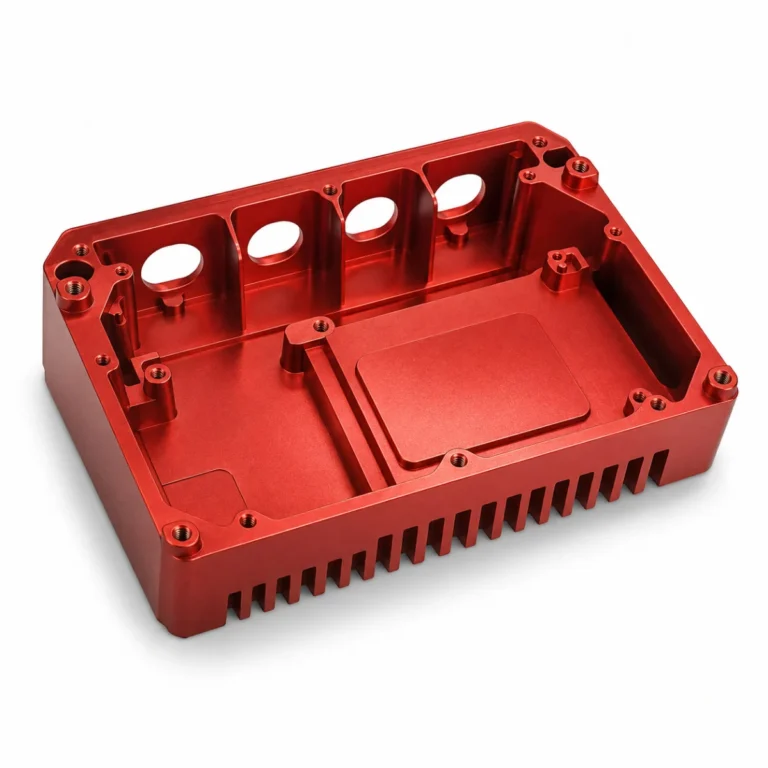
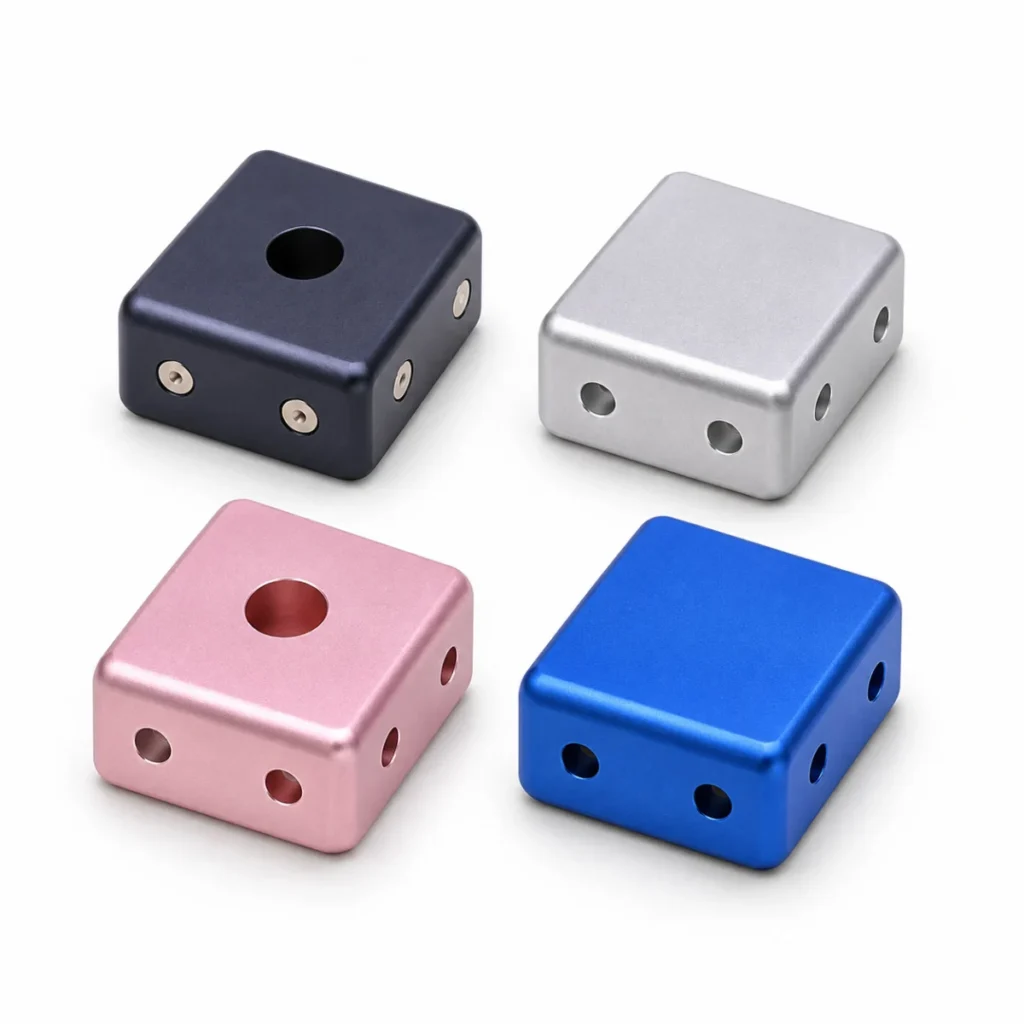
Map the coating boundary
A cosmetic face can receive a uniform finish while a precision bore or electrical contact may need masking. Show the boundary and specify what is acceptable where coated and masked areas meet.
Project notesInclude finish specification, colour reference, allowed contact-mark locations and the inspection condition for fitted diameters.
Specifying anodized aluminum
Identify the finish requirement, colour reference and which dimensions apply after anodizing. Supply a reference sample when appearance is critical.
Masking
Mark threaded holes, bearing seats and electrical contact faces that need special treatment.
Acceptance
Provide the finish specification and distinguish cosmetic faces from hidden surfaces.
Finish selection and dimensional acceptance
| Option | Typical substrate and purpose | What to mark on the drawing |
|---|---|---|
| Glass bead blasting | Metal surfaces where a uniform matte texture is wanted. | Supply an appearance reference. Mark polished lands, fitted bores and threads to protect. Blasting changes texture without adding a coating film. |
| Black anodizing | Aluminum parts requiring a black appearance and an anodic finish. | Specify colour reference, coating requirement, masked contact areas and the condition for measuring mating features. |
| Hard anodizing | Aluminum wear surfaces with a specified hard anodic layer. | State the required thickness and finished bore or shaft limits. Agree allowance and post-treatment checks. |
| Electroless nickel plating | Suitable prepared metal substrates requiring a nickel deposit on exposed surfaces. | Give substrate, coating specification and thickness range. Define coverage, masked threads and final inspection points. |